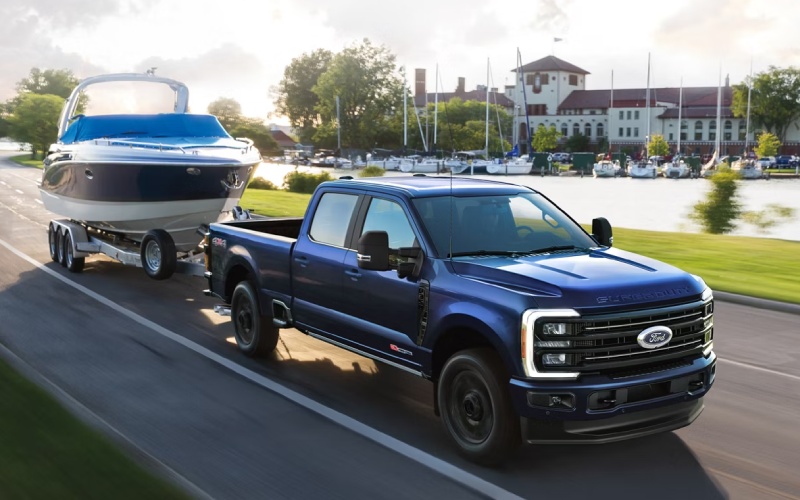
Angela Krause Ford - Is the Ford Super Duty® F-250® better for heavy towing than the Chevrolet Silverado 2500 HD near Cumming, GA?
For many heavy-duty truck shoppers, the question is not whether the Ford Super Duty® F-250® and Chevrolet Silverado 2500 HD are capable. Both are serious pickups with strong frames, available diesel power, advanced trailering tools, and interiors that can move from jobsite duty to family travel without feeling out of place. The more useful question is which truck gives a driver more confidence when towing often, towing heavy, or towing different types of trailers. Around Cumming, where drivers may be pulling equipment to a worksite, hauling a horse trailer toward rural property, or towing a camper toward North Georgia, that distinction matters. Capability on paper is important, but so is the experience of hitching, maneuvering, monitoring, and managing a load in real traffic.
That is where the Ford Super Duty® F-250® makes a strong case over the Chevrolet Silverado 2500 HD. Silverado HD offers a dependable 6.6L V8 gas engine, an available Duramax® 6.6L Turbo-Diesel V8, a 10-speed automatic transmission, available camera views, and an in-vehicle Trailering App. Those features are meaningful. However, Ford gives shoppers a wider powertrain range, stronger available diesel output, available towing-assist technology designed to simplify common towing tasks, and available onboard power that can support work away from a fixed power source. For owners who use a truck as a tool, a travel partner, and a daily driver, that broader capability can make Ford feel more complete.
How the Ford Super Duty® F-250® approaches heavy towing
Ford designs the Super Duty® lineup with towing as a central part of the truck’s identity. The available 6.7L High Output Power Stroke® V8 Turbo Diesel B20 engine produces 500 horsepower and 1,200 lb-ft of torque, giving Ford a major advantage over the Silverado HD’s available Duramax® 6.6L Turbo-Diesel V8, which is rated at 470 horsepower and 975 lb-ft of torque. That difference is especially relevant for drivers who tow frequently, climb grades, carry heavy bed loads, or want confident low-rpm pulling strength. Torque is what helps a heavy truck get a load moving and maintain authority when conditions change.
The Super Duty® truck also benefits from a fully boxed, high-strength steel frame and a smooth-shifting 10-speed automatic transmission. Ford’s available maximum towing figures across the Super Duty® lineup reach up to 40,000 lbs, while Chevrolet lists a maximum available diesel towing figure of 36,000 lbs for Silverado HD. Not every buyer needs maximum ratings, and actual capability depends on configuration, equipment, and trailer setup, but Ford’s higher ceiling gives shoppers more room to grow. If a driver’s towing needs may expand over the life of ownership, that added margin is valuable.
Powertrain choice gives Ford an advantage
One of the biggest differences between these two trucks is the number of engine choices. Chevrolet keeps the Silverado 2500 HD lineup straightforward with two engines: the 6.6L V8 gas engine and the available Duramax® 6.6L Turbo-Diesel V8. Ford offers four available engines across the Super Duty® F-250® lineup, allowing shoppers to fine-tune performance for work, towing frequency, payload needs, and personal driving preference.
- 6.8L gas V8: A strong foundational engine for drivers who want heavy-duty capability without stepping into diesel power.
- 7.3L gas V8: A higher-output gas option with added torque for confident hauling and towing.
- 6.7L Power Stroke® V8 Turbo Diesel: A proven diesel choice with excellent torque for frequent towing.
- 6.7L High Output Power Stroke® V8 Turbo Diesel: The top-output option for shoppers who want maximum available diesel strength.
This range matters because not every heavy-duty buyer has the same needs. A contractor pulling a skid steer, a farm owner towing livestock, and an RV traveler managing long highway grades may all prioritize different performance traits. Ford gives each of those shoppers a more tailored path. Rather than asking every diesel buyer to accept one output level, Ford lets customers choose the level of capability that fits the job.
Towing technology can make a difficult task feel simpler
Power is only part of the towing equation. The real challenge often happens before the trip begins or during low-speed maneuvering. Hitch alignment, trailer backing, tight parking areas, turning around on a narrow property entrance, or balancing a load can create stress even for experienced drivers. Ford addresses those moments with available towing technologies such as Pro Trailer Backup Assist™, Pro Trailer Hitch Assist™, Onboard Scales with Smart Hitch, Trailer Reverse Guidance, and available camera systems.
Chevrolet also offers helpful technology, including Hitch View, available Transparent Trailer View, Bed View Camera, HD Surround Vision, and an in-vehicle Trailering App. Those features can be useful for visibility and trailer management. Ford’s advantage is how its available systems work together to help with the full process: connecting, loading, backing, and monitoring. For a driver who tows several times a week, small reductions in effort can add up quickly. A smoother hitching process or better load awareness can save time, reduce frustration, and support more confident decision-making.
Daily usability beyond the trailer
A modern heavy-duty truck must do more than pull. Many owners spend hours inside the cabin, use the bed as a mobile workspace, and need technology that supports productivity. Ford’s available SYNC® 4 system with a 12" center display, available 12" cluster display with head-up display, available wireless charging, and available interior work surface help the Super Duty® F-250® serve as a command center. That is especially helpful for small-business owners, field supervisors, and fleet users who may need to review information between appointments.
The exterior also supports real-world use. Available PowerScope® trailer tow mirrors assist with visibility around wide trailers, while the available power tailgate with retractable tailgate step improves bed access. Available 2kW Pro Power Onboard™ gives drivers access to usable power for tools and equipment, which can be a major advantage at remote work locations, undeveloped properties, or roadside tasks. Silverado HD offers available 120-volt power and a versatile Multi-Flex Tailgate, but Ford’s onboard power capability is a standout feature for work-focused buyers.
Which truck is the better fit for local heavy-duty needs?
For shoppers serving Cumming, Canton, and Woodstock, the right heavy-duty truck often needs to handle mixed responsibilities. A typical week might include highway driving, gravel access roads, trailer hauling, family errands, and weekend recreation. The Chevrolet Silverado 2500 HD is a capable competitor, particularly for buyers who value its Durabed, available camera views, and Duramax® diesel. Still, Ford’s stronger available diesel torque, broader engine lineup, available towing assistance, and work-ready technology give the Super Duty® F-250® a more confident edge.
Angela Krause Ford can help shoppers evaluate cab size, bed length, engine selection, towing equipment, available packages, and technology features based on actual use rather than guesswork. That matters because a heavy-duty truck is a long-term tool. Choosing the right configuration from the start can improve confidence every time a trailer is connected or a heavy payload is loaded.
Frequently Asked Questions:
Is the Ford Super Duty® F-250® more powerful than the Chevrolet Silverado 2500 HD?
When comparing available diesel output, yes. Ford’s available 6.7L High Output Power Stroke® V8 Turbo Diesel B20 engine produces 500 horsepower and 1,200 lb-ft of torque, while Chevrolet’s available Duramax® 6.6L Turbo-Diesel V8 produces 470 horsepower and 975 lb-ft of torque.
Does the Silverado 2500 HD have good towing technology?
Yes. Silverado HD offers useful features such as Hitch View, available Transparent Trailer View, available Bed View Camera, HD Surround Vision, Trailer Side Blind Zone Alert, and an in-vehicle Trailering App. Ford remains especially appealing because available Pro Trailer Backup Assist™, Pro Trailer Hitch Assist™, Onboard Scales with Smart Hitch, and Trailer Reverse Guidance support several key parts of the towing process.
Which truck is better for someone who tows different trailers?
The Ford Super Duty® F-250® is a strong choice for varied towing needs because of its engine selection, available smart hitching and backing technologies, and high available torque. Drivers who switch between utility trailers, equipment trailers, RVs, boats, or livestock trailers may appreciate Ford’s flexible capability.
Why choose the Ford Super Duty® F-250® over the Chevrolet Silverado 2500 HD?
Choose Ford if maximum available diesel strength, broader powertrain choice, available onboard power, and comprehensive towing assistance are priorities. Silverado HD is capable, but Ford offers a more complete blend of muscle, technology, and everyday utility for many heavy-duty truck shoppers.